What SLPs Need to Know:
Alexia
15 min read
Think about the mental effort it takes to read this article. The information may be dense, but the act of reading probably feels effortless. Literacy allows people to participate in vocational, leisure, and social activities, but its contribution to quality of life is often overlooked in healthy adults. When a brain injury or illness impacts the reading process, even simple text can become slow, effortful, or impossible to understand, turning everyday activities like reading a message, following instructions, or enjoying a book into significant challenges.

When adults who were previously literate suddenly or gradually experience difficulties with reading, it’s known as acquired alexia. While dyslexia is a developmental reading problem, acquired alexia most commonly occurs after a stroke as a symptom of aphasia.
People may experience difficulty with oral reading, reading speed, and/or reading comprehension (Knollman-Porter et al., 2015). A prevalence study revealed that over 80% of people with aphasia also presented with alexia (Smith & Ryan, 2020). Many patients recognize the value of targeting reading skills in speech therapy because of the frustration and annoyance associated with this deficit (Kjellén et al., 2017; Webster et al., 2021).
The Foundations of Reading
Before undertaking assessment and treatment, clinicians should understand the sub-processes and cognitive demands involved in reading.
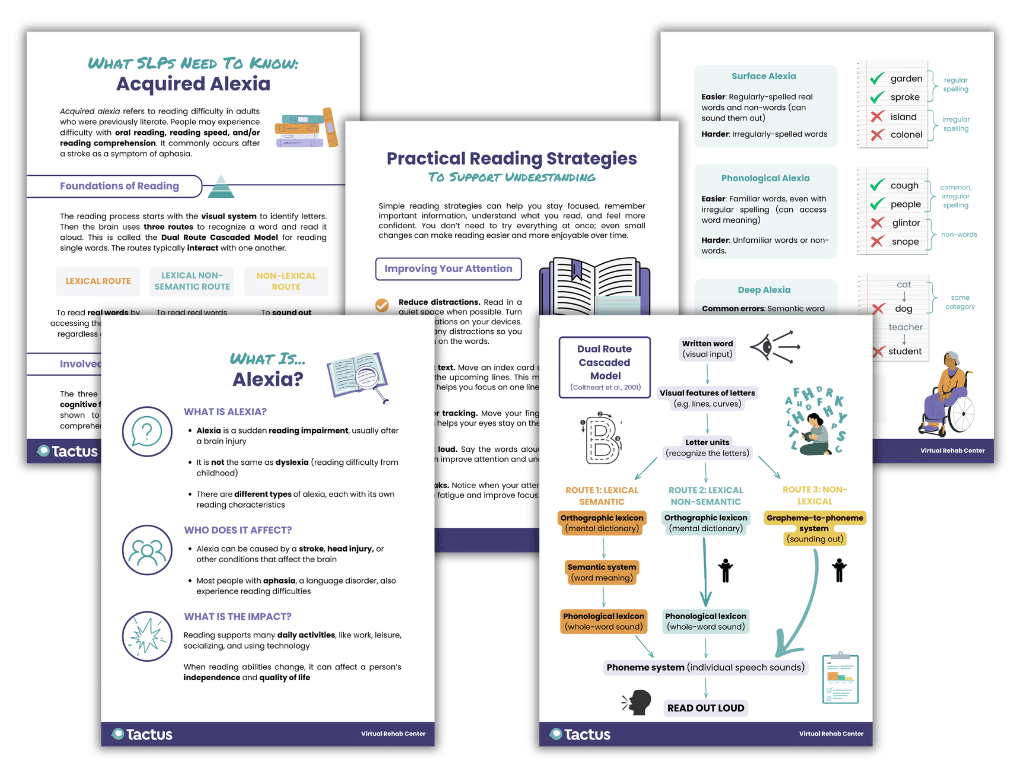
Coltheart and colleagues (2001) proposed the Dual Route Cascaded Model for reading single words. The whole process begins with the visual system, which identifies letter features and individual letters. From there, there are three routes the brain can use to recognize the word and read it aloud:
- Lexical route: uses the semantic system to read familiar words regardless of spelling regularity. We see the word as a whole and know what it is, without sounding it out, like lasagna or cavern.
- Lexical non-semantic route: allows recognition of familiar words without being able to attach meaning to them if the semantic system is impaired. The person can read aloud, but doesn’t understand what the text is saying.
- Non-lexical route: uses grapheme-to-phoneme conversion skills to sound out unfamiliar words or non-words. So we can sound out blick, even though it doesn’t mean anything.
This is comparable to the dual-route model for writing. Learn about it in What SLPs Need to Know: Agraphia.
While word recognition is essential to reading, it accounts for less than half of the variation in reading difficulties (Cartwright & Palian, 2024). To fully comprehend text at the sentence and discourse levels, readers must engage syntactic processes to understand sentence structures, along with high-level cognitive skills.
The three core executive functions have all been shown to predict word reading, reading fluency, and reading comprehension. Each skill contributes to how readers interact with and make meaning from text:
- Working memory (updating): to hold onto relevant information from the text while recruiting prior knowledge to make inferences
- Cognitive flexibility (shifting): to read heteronyms (the same written word with different pronunciations) correctly based on the context
- Response inhibition: to ignore irrelevant text while interpreting the main message
Alexia Classifications
Learning the distinct types of alexia can help clinicians develop targeted treatment plans. Foundational work by researchers such as Shallice and Warrington in the 1970s and 1980s helped shape the classification systems we use today. Alexia is typically divided into two broad categories: peripheral and central.
Peripheral Alexia: Impaired Visual Processes
Peripheral alexia involves difficulties with visual perception or attention, meaning the language system is generally unaffected. A patient might not recognize letters or may mistake one letter for another. This prevents them from matching words to their stored mental representations (Balani & Bickerton, 2025). Examples of peripheral alexia subtypes include pure alexia, neglect alexia, and attentional alexia.
Pure Alexia
Pure alexia (also called alexia without agraphia) is characterized by letter-by-letter reading, with greater difficulty as word length increases. For example, a person with pure alexia would read H-O-R-S-E slowly, one letter at a time, rather than accessing the mental representation of the written word “horse.” Language functions are largely spared in pure alexia, except for word-finding difficulties potentially (Starrfelt & Woodhead, 2021). People with pure alexia might also have face recognition deficits (Balani & Bickerton, 2025).
Neglect Alexia
Neglect alexia occurs in up to 25% of survivors of a right hemisphere stroke (Rich & Palmer, 2023). Patients with neglect alexia will either ignore whole words on the left side of the page, or they may not attend to the starting letters of a word (called a unilateral paralexia). A person with this subtype may also present with visual left neglect or inattention to the left side of space.
Attentional Alexia
Attentional alexia is characterized by letter migration errors, where letters “jump” from one place to another. This can happen within a word (like reading rainbow as bainbow) or across words on the same page.
Looking for Printable Resources?
Unlock the Handout Vault
Dozens of high-quality, well-researched PDF handouts are available all in one place: The Tactus Virtual Rehab Center!
Patient education, home practice, clinical guides, visual supports, & a summary of this article for quick reference.
Sign up today for a risk-free 21-day trial of this innovative web-based therapy platform for SLPs.
Access 50+ evidence-based treatments and 90+ handouts created specifically for adult medical speech-language pathologists.
Central Alexia: Impaired Linguistic Processes
Central alexia is directly related to aphasia. It involves deficits in lexical and sub-lexical processing. Three subtypes include surface alexia, phonological alexia, and deep alexia.
Surface Alexia
Surface alexia occurs when a person relies on sounding out words letter-by-letter via the phonological route, because their whole-word lexical route is impaired. As a result, regularly spelled words and non-words can often be read accurately (e.g. cake or mub). However, irregularly spelled words (ones in which pronunciation doesn’t match typical spelling rules) pose a challenge. For example, a person with surface alexia might misread knife as “kuh-nife” because they cannot access the stored whole-word representation.
Phonological Alexia
Phonological alexia is the opposite in many ways. Individuals can read familiar, high-frequency words through the lexical-semantic route, even if the spelling is irregular. They struggle with unfamiliar words, low-frequency words, non-imageable words (e.g. fate), and non-words (e.g. brug) because their grapheme-to-phoneme conversion system is impaired. In therapy, treatment often focuses on strengthening phonological awareness and decoding skills to rebuild access to the phonological route (Purdy et al., 2018).
Deep Alexia
Deep alexia is considered a more severe type of central alexia because it involves damage to both the phonological and lexical reading routes. Individuals with deep alexia present with semantic word substitutions, such as reading chair as table. They might also present with a reduced vocabulary, limited to concrete words (Smith & Ryan, 2020).
Reading Assessments for Adults
When assessing reading ability, it’s important to consider the patient’s visual acuity, cognitive abilities, and any co-occurring deficits that might impact oral reading, such as dysarthria, acquired apraxia of speech, or non-fluent aphasia.
During the testing process, take note of error patterns that could indicate which reading route is compromised (lexical or non-lexical) by examining:
- Real words vs. non-words
- Regularly spelled words vs. irregularly spelled words
- High frequency words vs low frequency words
- Imageable vs. non-imageable words
The online course, Acquired Reading Impairment in Aphasia: Assessment and Treatment (McCardel, n.d.), outlines general and specific assessments for adults based on reading level.
General Standardized Assessments for Reading
Most standardized aphasia assessments have reading subtests, including the BDAE, WAB, and CAT. To dive deeper into reading, try:
- Reading Comprehension Battery for Aphasia- 2nd Edition (RCBA) – $$$
- Comprehensive Assessment of Reading in Aphasia (CARA) – Coming Soon!
Word-Level Reading Assessments
- Arizona Battery for Reading and Spelling (Beeson et al., 2010) – available here
- The Psycholinguistic Assessments of Language Processing in Aphasia (PALPA)- Reading subtests – $$$
- The Standardized Assessment of Phonology in Aphasia (SAPA)- Reading subtest (Kendall, 2010) – available here
- The Johns Hopkins Dysgraphia Battery and Dyslexia Battery (Goodman & Caramazza, 1986) – available in Appendix 25-1 of the Chapey aphasia textbook
Sentence-Level Reading Assessments
- Kempler Sentence Comprehension Test – FREE
- Northwestern Assessment of Verb Inflection (NAVI) – $$
Discourse-Level Reading Assessments
- Discourse Comprehension Test – $$
- Gray Oral Reading Reading Test- 5th Edition (GORT-5) – $$$
- Nelson-Denny Reading Test – $$$
Cognitive Assessments for Alexia
Measures of executive functions are tied to reading outcomes (Cartwright & Palian, 2024), so it’s worthwhile to assess areas like attention and working memory. Clinicians can use the following to get a better idea of the patient’s abilities:
- The Test of Everyday Attention – $$$$
- N-Back task
- Reverse Digit Span task
Learn more about the relationship between cognition and language in What SLPs Need to Know: Executive Function and Aphasia
Patient-Reported Outcome Measures for Alexia
Patient-reported outcome measures (PROMs) can help clinicians understand the real-world impact of alexia. Some PROMS for reading include:
- Reading Confidence and Emotions Questionnaire (see Appendix 1)
- Subjective Symptom Load Questionnaire (see Appendix A)
- Communication Activities Checklist
SLP Cheat Sheets:
Alexia & Agraphia Types
Struggle to keep all this straight? Then print, laminate, and refer to these cheat sheets when assessing and diagnosing anyone with a written language disorder!
Easily compare all the features of each subtype and learn which treatments are most appropriate.
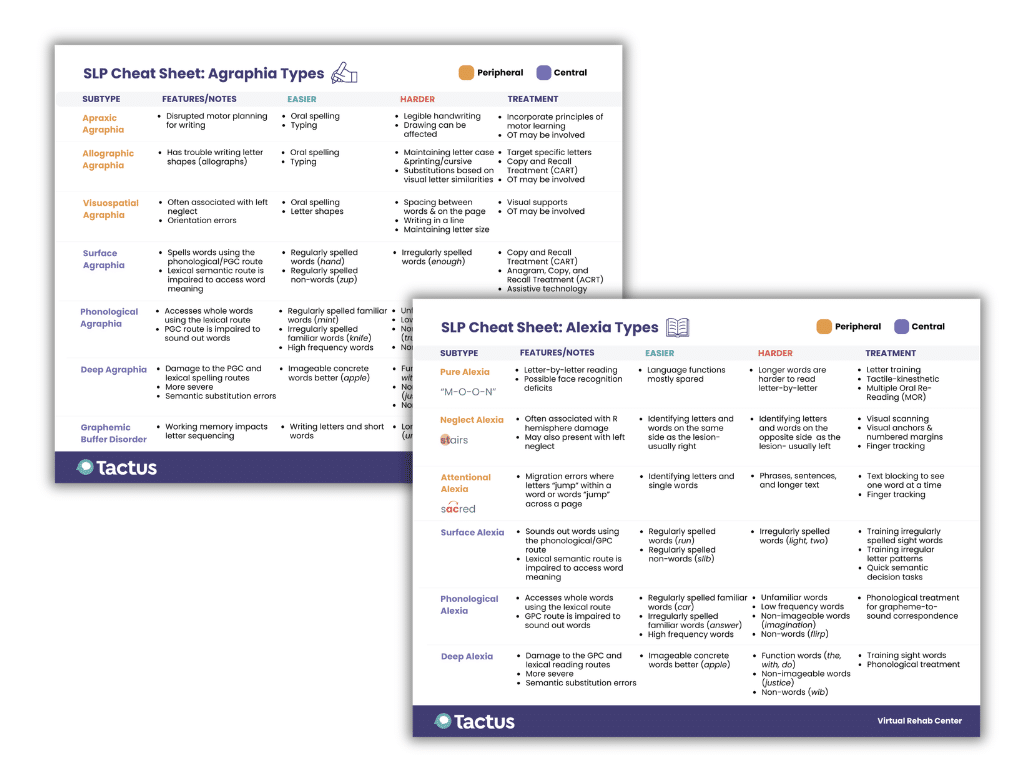
Alexia & Agraphia SLP Cheat Sheets are just one of many clinician-focused handouts in the Tactus Virtual Rehab Center.
Sign up today for a risk-free 21-day trial of this innovative web-based therapy platform for SLPs.
Evidence-based is easy when you’re using the right tools!
Evidence-Based Alexia Treatments
When it comes to treating alexia, there’s no one-size-fits-all solution. The approach often depends on the type of reading impairment, as well as the individual’s overall language and cognitive abilities. While there are many approaches and tools available, we’ll focus on a handful of treatments supported by research, excluding neglect and attentional alexia, for the purpose of this article.
1) Letter Training
Letter training is appropriate for those with pure alexia who present with letter-by-letter reading. Starrfelt et al. (2013) described several letter-specific tasks:
Letter Identification
Letter identification and naming can help patients read using the letter-by-letter method more efficiently. As they advance to naming letter strings (e.g. C-A-T), clinicians can encourage patients to say the letters covertly instead of aloud (Daniel et al., 1992).
Tactile & Kinesthetic Treatments
Tactile treatment involves having patients identify letters that are traced on their skin. Similarly, kinesthetic treatment engages the patient’s own muscle movements by having the patient trace letters with their finger to support letter recognition through motor feedback. A combined approach, known as tactile-kinesthetic treatment, has patients trace letters on their own skin, integrating both sensory input and motor movement.
Starting with A-B-C:
Letter Treatments
Matching Letters & Identifying Letters are 2 treatments in the Virtual Rehab Center that work on letter recognition.
Match within and across case for non-verbal practice in Matching Letters. Use listening skills to match letters to their spoken names in Identifying Letters.
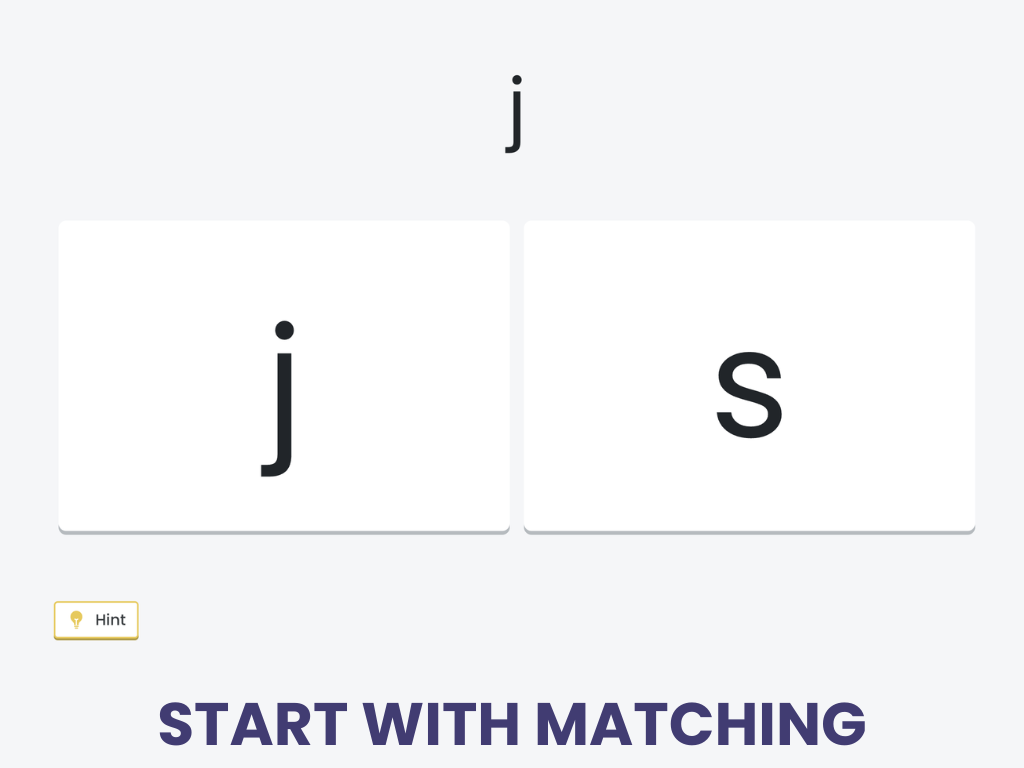
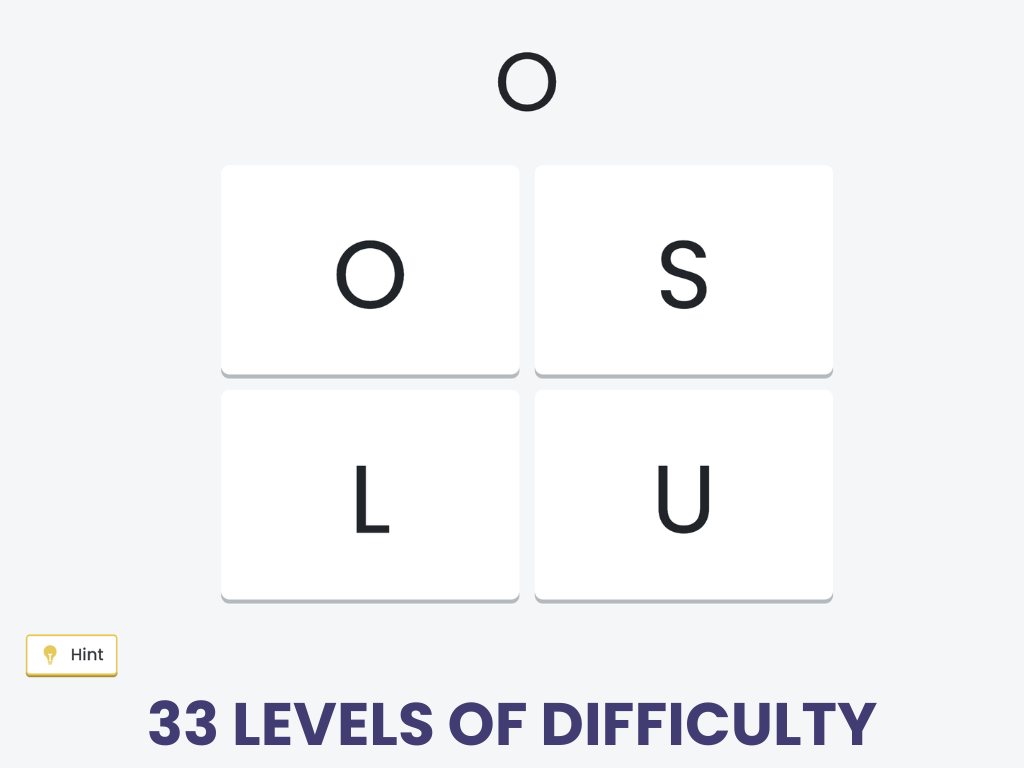
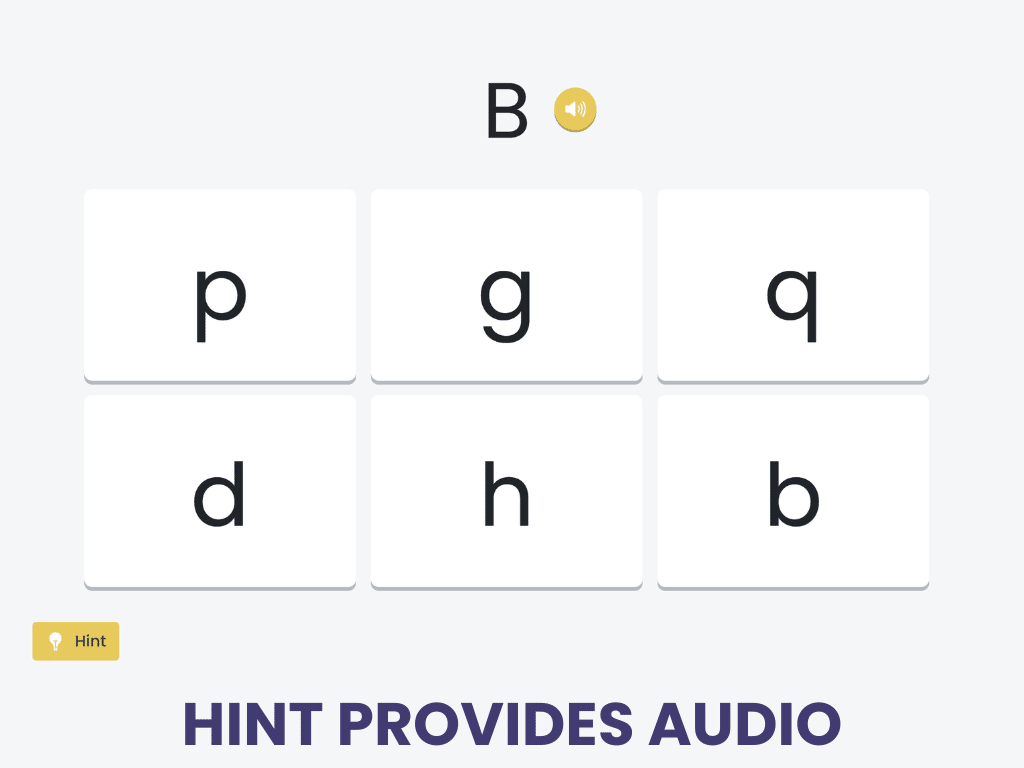
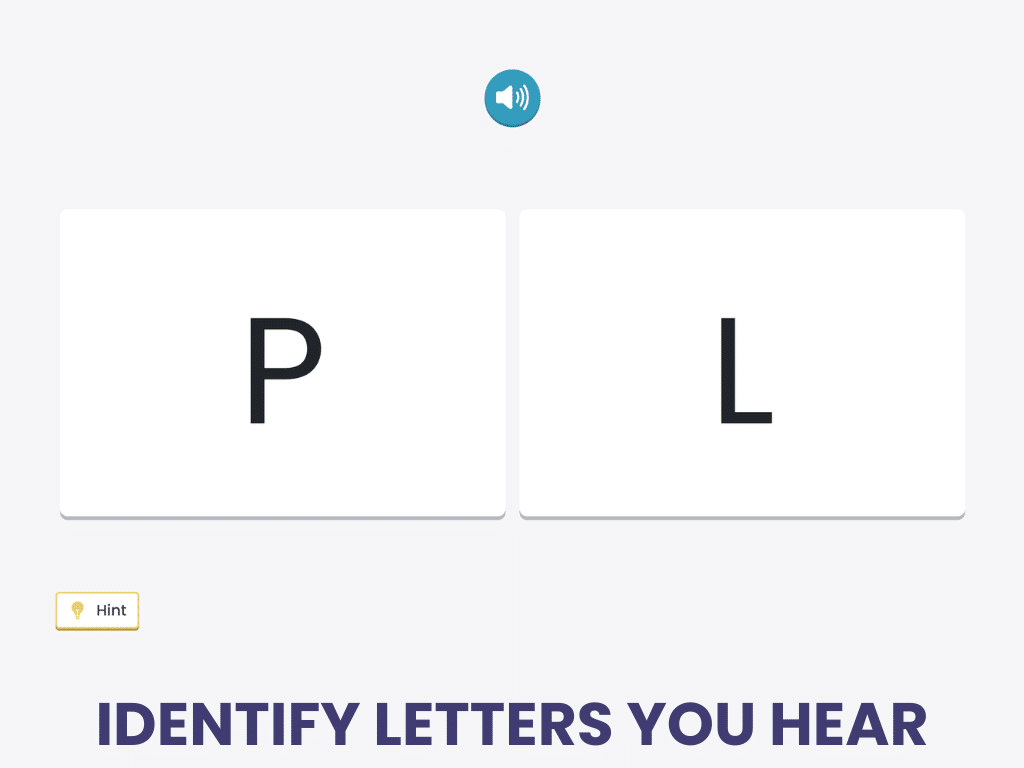
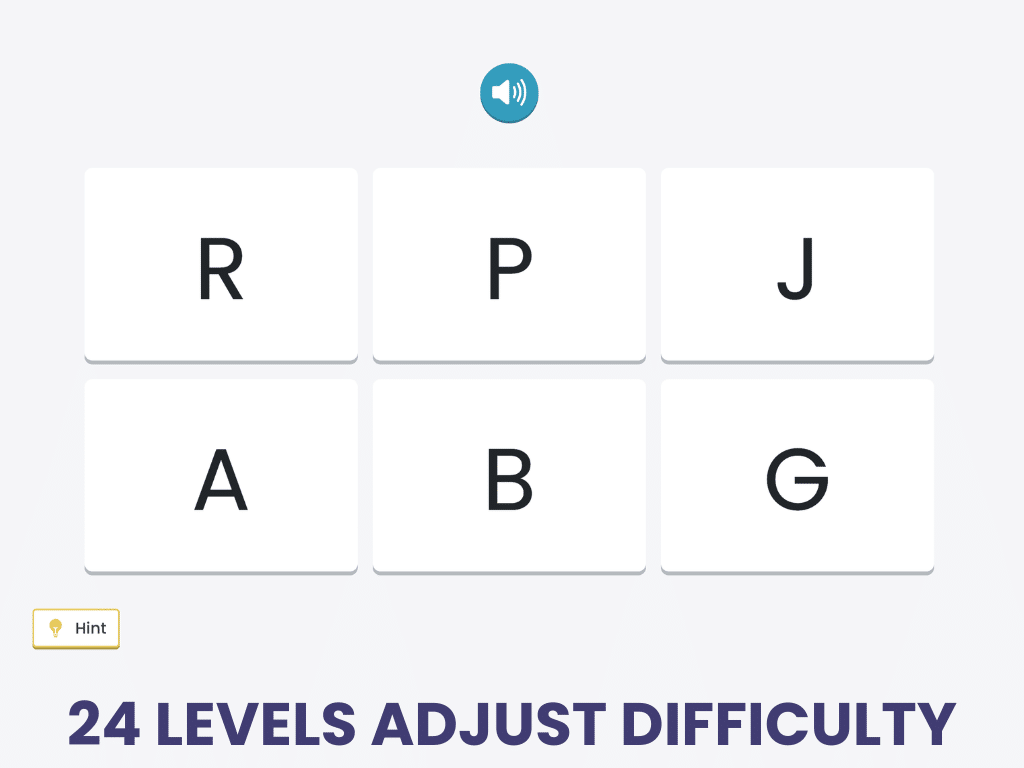
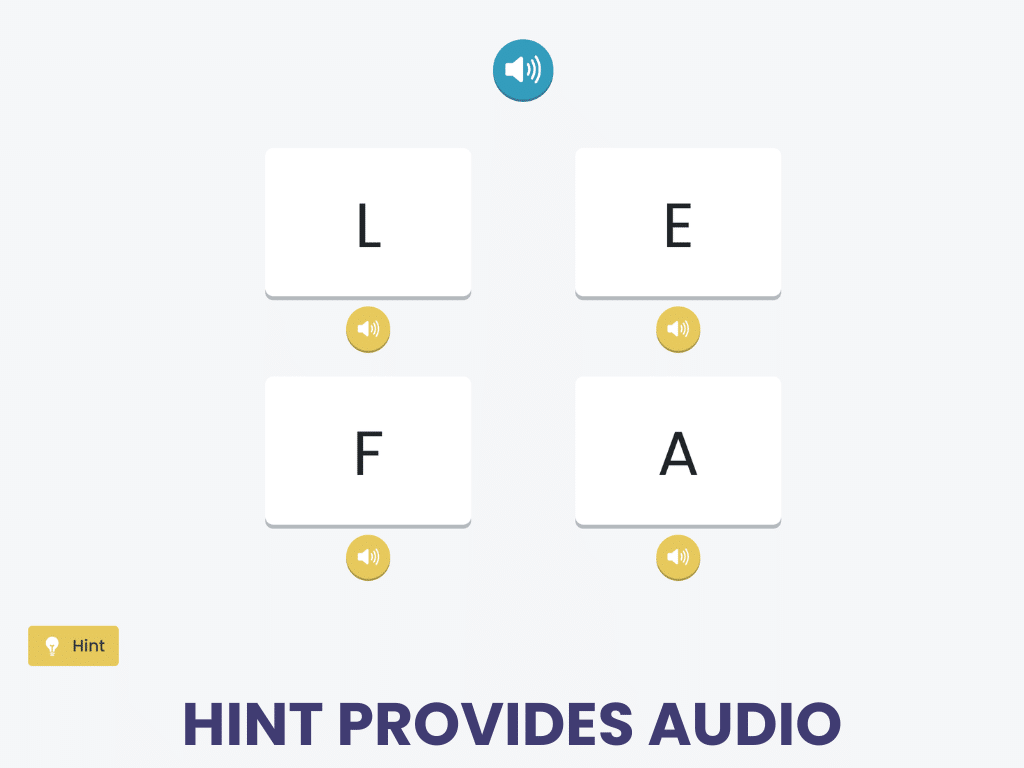
Master the basics of reading with these two treatments in the Tactus Virtual Rehab Center. Patients with pure alexia will benefit as they read letter-by-letter.
Sign up today for a risk-free 21-day trial of this innovative web-based therapy platform for SLPs.
We know that regaining reading skills can take time. That’s why we offer so many different reading treatments to meet you where you are right now.
2) Single-Word Treatments
Phonological Treatment
Phonological Treatment is a self-cuing approach for individuals with phonological alexia or deep alexia. It involves teaching keywords for sounds and letters in difficult words (Beeson, 2010). Patients are encouraged to write a letter for a given sound, associate the sound with a keyword starting with that sound, write the keyword and underline the sound, then copy the keyword. This cuing hierarchy can be supplemented by other phonological tasks, like matching sounds to letters or words and identifying sounds in initial and final positions of words.
Learn more in How To: Phonological Treatment and use the Match activity in the Tactus Advanced Writing Therapy app to practice.
Semantic Decision Tasks
Semantic decision tasks are useful for individuals with surface alexia who rely on sounding out words instead of accessing meaning through the lexical route. In this task, patients are briefly shown whole words for less than a second and asked to decide whether the word belongs to a certain category. For example, if the word gerbil flashes on the screen, the patient would respond with “yes, it’s an animal” or “no, it’s not an animal.” Some studies have reported improvements in reading speed, accuracy, and the word length effect following semantic decision tasks. However, results have been mixed, and no studies so far have included statistical analysis to support the findings (Starrfelt et al., 2013).
Training Exceptions
Training irregular letter patterns (e.g. -ight like in the word night), sight words, or encouraging oral spelling of irregularly spelled words are more therapy options for those with surface alexia.
3) Sentence-Level Treatments
Oral Reading for Language in Aphasia (ORLA)
Oral Reading for Language in Aphasia (ORLA) involves systematic reading in unison with the clinician. It can be used with sentences or paragraph-level text. There are six steps:
- The clinician reads aloud and points to each word
- Repeat Step 1 with the patient also pointing
- Repeat Step 2 with the patient also reading aloud as they point
- The clinician chooses a word from each sentence to say aloud, and the patient points to it
- The clinician points to a word from each sentence, and the patient reads it aloud
- Both the clinician and the patient read the text aloud together again
Cherney (2010) reported improvements on the Western Aphasia Battery (WAB) from pre- to post-ORLA treatment in a group of 25 participants with chronic non-fluent aphasia. Gains were observed across verbal expression, auditory comprehension, reading comprehension, and writing.
Findings show that computer-based ORLA is a good option for home programs (Cherney, 2010). While the original ORLA computer software is no longer supported, Web ORLA is an experimental version that has shown promise, with the experimental group showing greater language gains at the 6-week follow-up compared to the placebo-controlled group (Cherney et al., 2021).
Treatment of Underlying Forms (TUF)
Treatment of Underlying Forms (TUF) was first developed by Cynthia Thompson (2010) to target verbal expression and comprehension, but it can also be useful for reading comprehension. It involves converting simple canonical sentences (The dog chased the cat) into complex non-canonical sentences (It was the cat who was chased by the dog).
Mapping Therapy
Mapping Therapy is another linguistically heavy approach that focuses on training thematic roles. While it is generally used to improve auditory comprehension of sentences, it may generalize to reading comprehension (Valinejad et.al., 2024).
4) Discourse-Level Treatments
Hierarchical Reading Tasks
Katz and Wertz (1992; 1997) pointed out the value of progressing reading from simple to more complex targets, like from words to sentences to paragraphs. To make this easier, they developed a computer-based reading treatment and found generalization to paper-based reading tasks and improvements in other language areas.
Multiple Oral Re-Reading (MOR)
Multiple Oral Re-Reading (MOR) involves reading the same text out loud repeatedly to improve decoding speed and whole-word recognition (Kim & Russo, 2010). It’s comparable to ORLA, but it’s usually done with multi-paragraph material. MOR is best suited for people with pure alexia with a letter-by-letter reading pattern, but it can also be used with those with mild fluent aphasia and mixed alexia with a slower reading rate. Regular home practice of at least 30 minutes a day is key to achieving positive outcomes, as well as a treatment duration of at least 3 months with weekly sessions.
Practice Reading Strategies:
Read & Remember Articles
Read & Remember Articles is a high-level treatment inside the Tactus Virtual Rehab Center to work on memory & reading.
Learn and practice 3 strategies for reading comprehension & recall: oral reading, highlighting keywords, and summarizing.

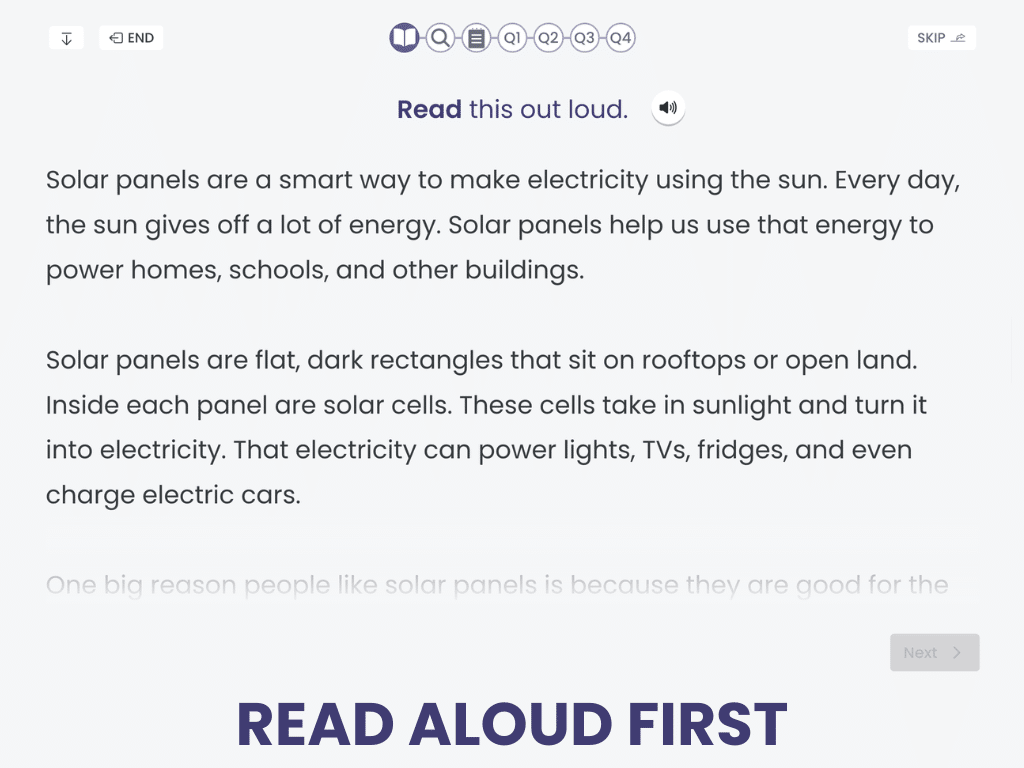
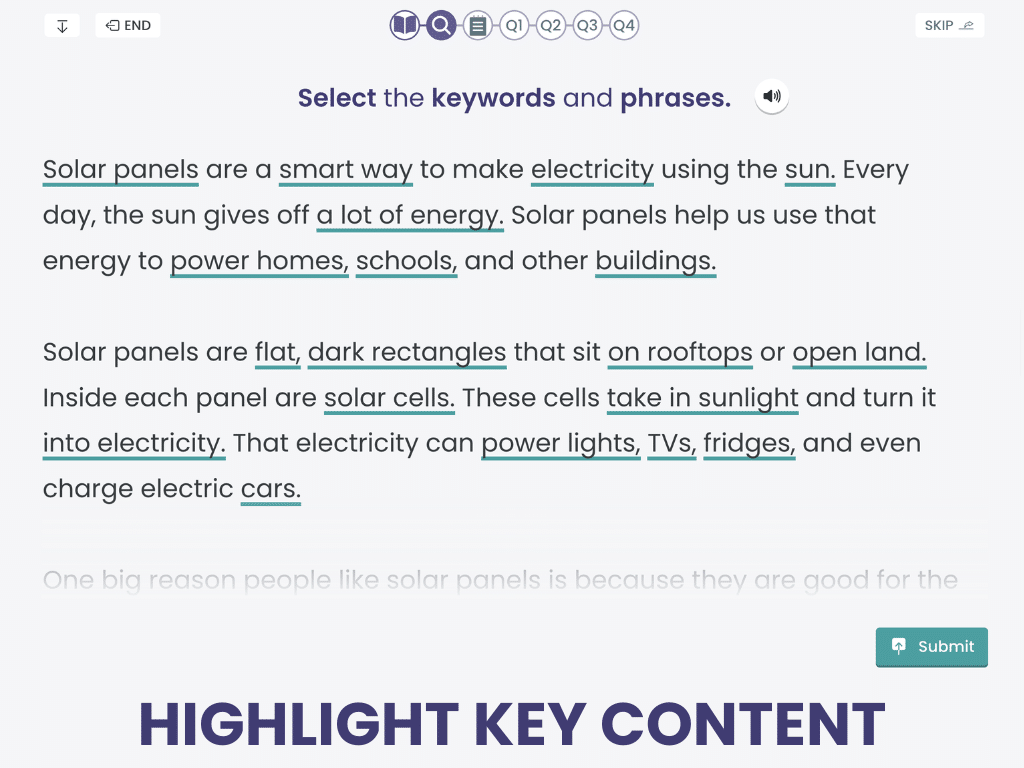
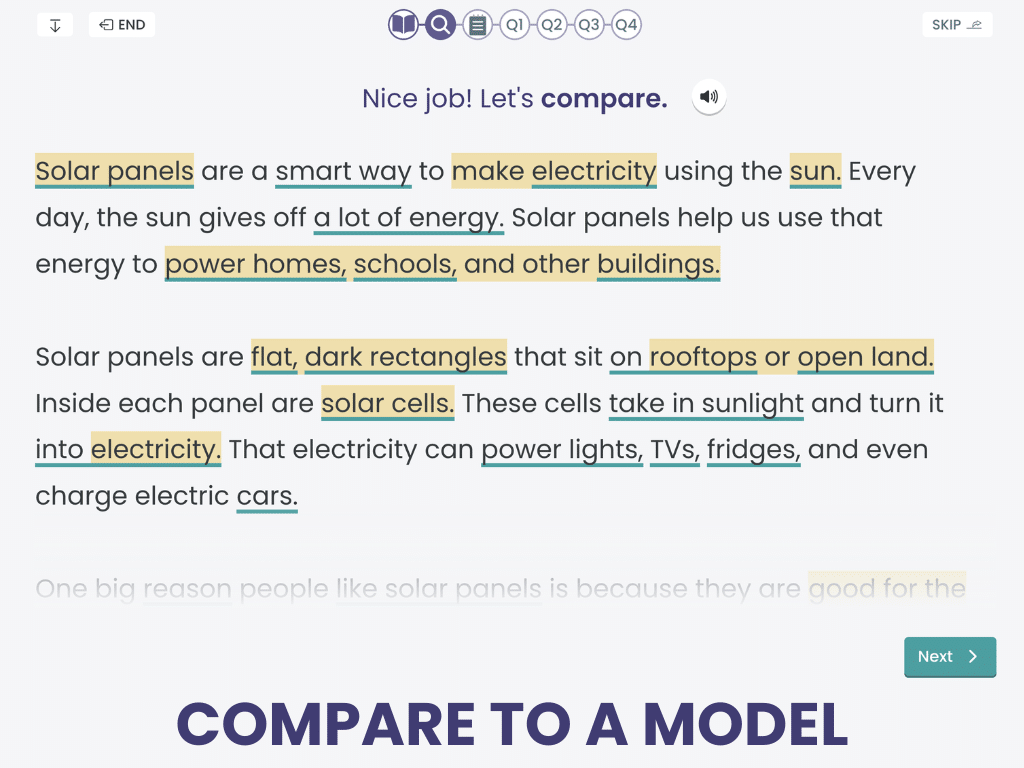
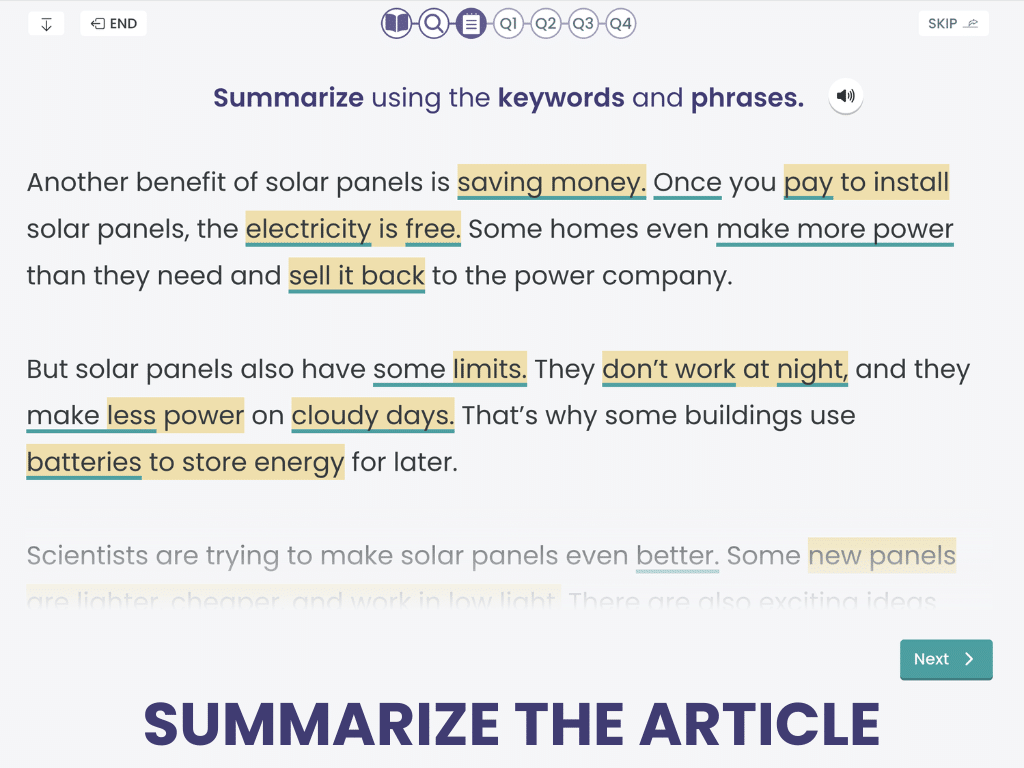
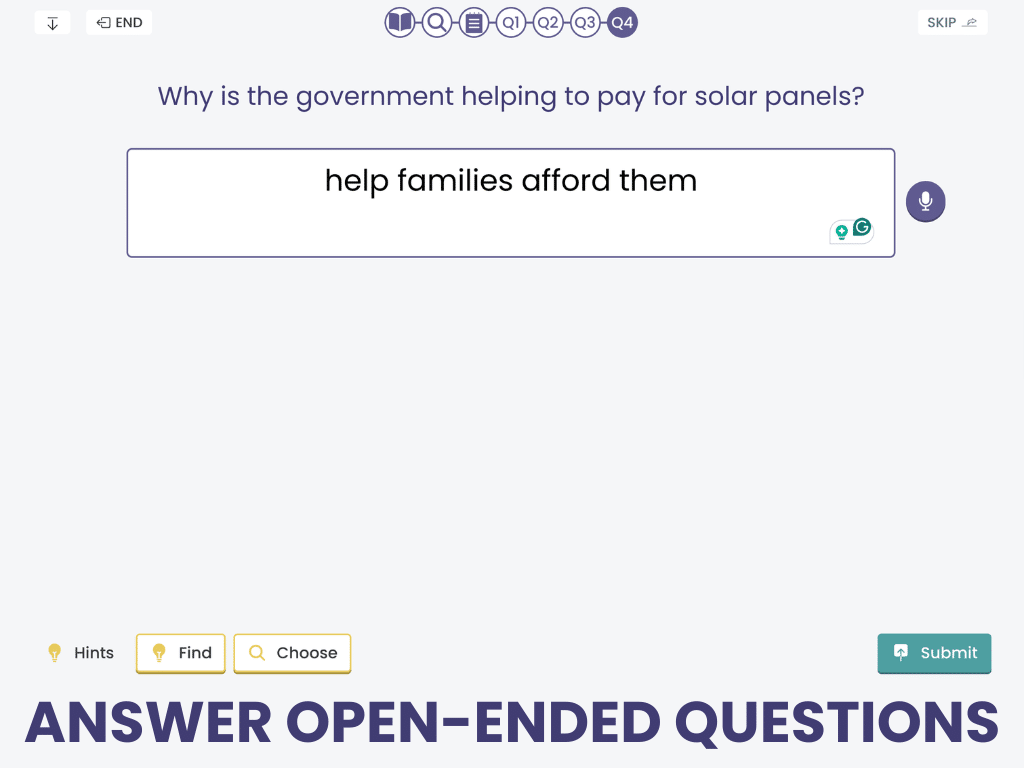

There are 4 levels of difficulty across 3 content categories, allowing patients to read material that interests them.
Sign up today for a risk-free 21-day trial of this innovative web-based therapy platform for SLPs.
Combine language and cognition with this functional treatment, perfect for those with alexia, aphasia, and cognitive-communication impairments.
Reading Strategy Instruction
Reading strategy instruction is beneficial because it supports language and cognitive processing, it doesn’t require a high dosage like other treatments, and the strategies can be used across different texts or software (Thumbek, 2024). Strategies can be divided into three types: visual, content, and cognitive/metacognitive (Purdy et al., 2017, Watter & Finch, 2017):
- Visual: finger tracing, text blocking, underlining/highlighting keywords
- Content: previewing headings, identifying keywords, summarizing, creating mind maps, answering questions
- Cognitive: comprehension monitoring, recalling details, rereading, reflecting, and making predictions
Book Clubs
Knollman-Porter & Julian (2019) reported that book clubs for people with reading comprehension deficits can encourage them to try different strategies in a natural setting. Other benefits of book clubs include increased reading motivation, social opportunities, and emotional support for individuals with aphasia.
Read Attentively, Summarize and Review (RASR)
The Read Attentively, Summarize, and Review (RASR) treatment helps patients remember what they read. It’s based on the Attentive Reading and Constrained Summarization (ARCS) approach for spoken and written discourse (ARCS-W), but RASR doesn’t include constraints. Rogalski et al. (2014) outlined the steps for RASR:
- Read the text aloud, one paragraph at a time
- Verbally summarize the paragraph from memory
- Reread the paragraph aloud
In a study of 44 healthy older adults, the RASR group remembered more information from text immediately and after a 24-hour delay compared to a group that used the RARA technique (Read and Reread Attentively) without the summarization component.
Everyday Text in Levels:
Reading Functional Materials
Reading Functional Materials is one of the most popular treatments in the Tactus Virtual Rehab Center to work on reading.
Stimuli are organized into 3 levels of difficulty based on the amount of information included. There are 5 multiple-choice questions for each stimulus.
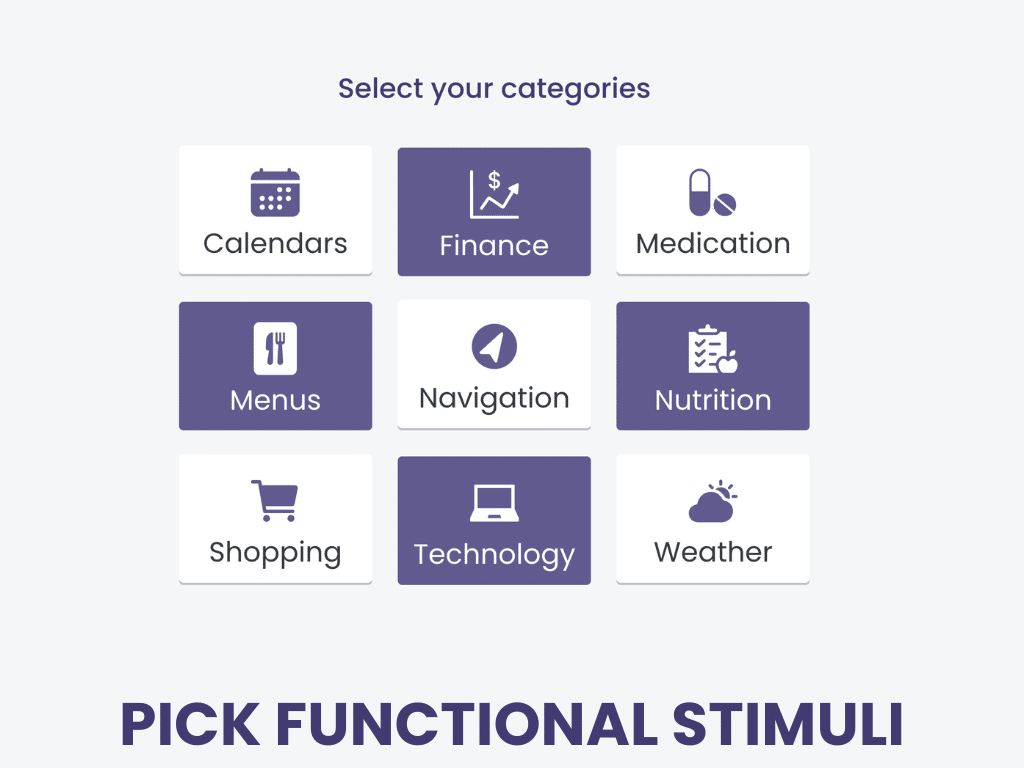
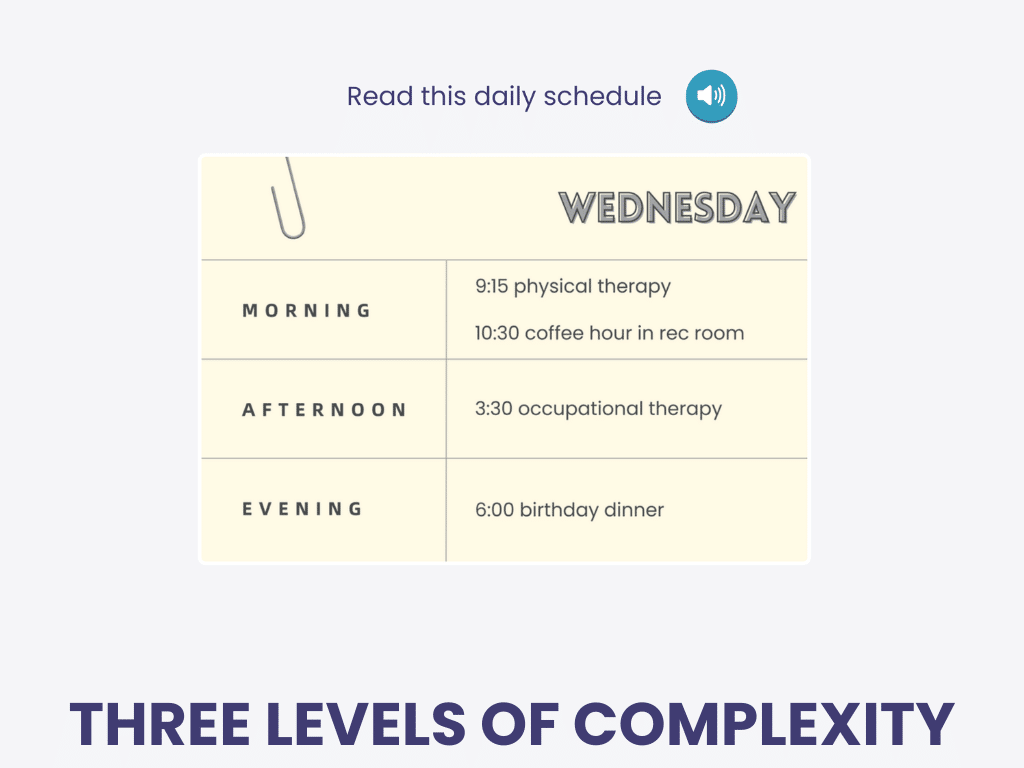
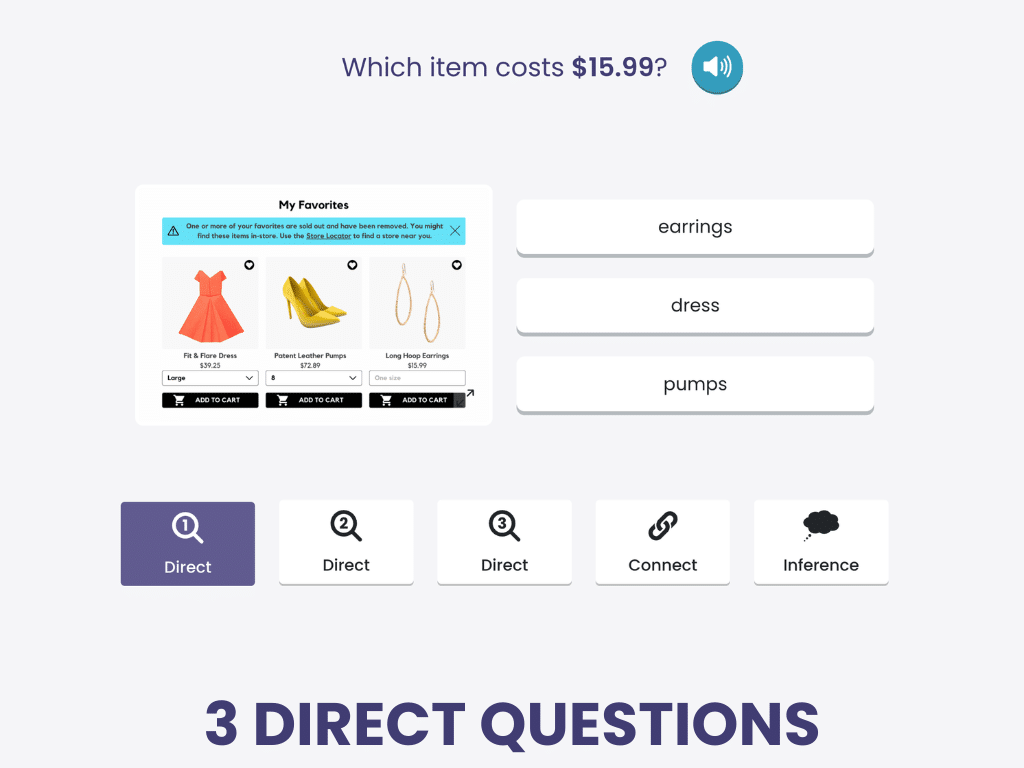
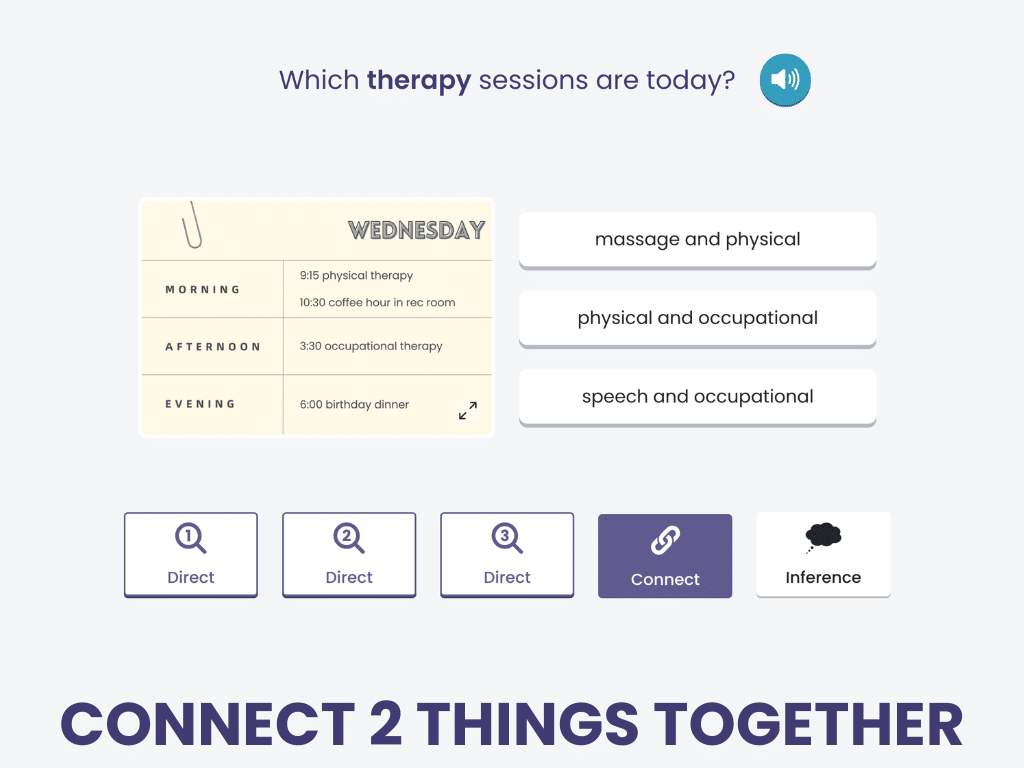
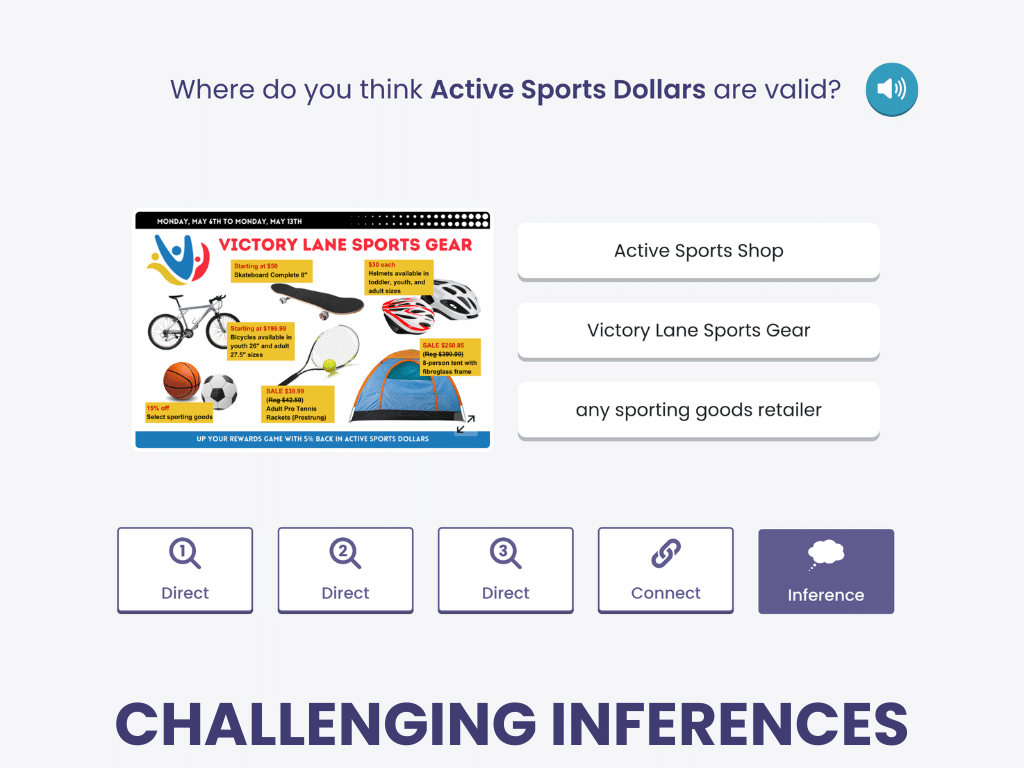
Patients choose any combination of 9 categories of functional stimuli, including menus, weather, shopping, maps, finances, and more!
Sign up today for a risk-free 21-day trial of this innovative web-based therapy platform for SLPs.
You’ll love how life-like and practical these exercises are.
5. Cognitive Treatments for Alexia
Direct Attention Training (DAT)
Preliminary findings suggest Direct Attention Training (DAT) can positively impact reading comprehension outcomes (Coelho, 2005; Sinotte & Coelho, 2007). Lee & Sohlberg (2013) continued this research using Attention Process Training-3 (APT-III) with four adults with chronic aphasia. After 8 weeks of treatment, two of the four subjects showed improvements in maze reading and minor gains in reading accuracy, rate, and comprehension.
Learn more about Direct Attention Training in our article What SLPs Need to Know: Attention and Aphasia
Reading-Specific Executive Functions
More recent research states that working on domain-general executive functions (EFs) might not be enough to see improved reading skills. Cognitive treatments with the intention of targeting reading should involve reading-specific EF processes (Cartwright & Palian, 2024). Some examples include:
- Remembering a string of sounds while decoding a non-word (working memory or updating)
- Shifting between pronunciations or multiple meanings (cognitive flexibility or shifting)
- Ignoring irrelevant text details (inhibition)
Studies looking at reading-specific EF treatments have had positive outcomes so far, but more research needs to be done to confirm this relationship (Cartwright & Palian, 2024).
Final Thoughts on Alexia
Acquired alexia can make reading feel frustrating and slow, but there are many ways to support adults in improving their skills. It’s all about finding the right approach for each individual’s needs, whether that’s at the word, sentence, or discourse level. Progress is possible with patience, the right support, and consistent practice.
Learning More about Alexia
We used many references to bring you this information, all linked where cited. We recommend these selected sources for a good overview:
- Bahrami Balani, A., & Bickerton, W. L. (2025). Acquired reading impairment following brain injury. Applied Neuropsychology: Adult, 32(1), 1-19.
- Purdy, M., Coppens, P., Madden, E. B., Mozeiko, J., Patterson, J., Wallace, S. E., & Freed, D. (2019). Reading comprehension treatment in aphasia: A systematic review. Aphasiology, 33(6), 629-651.
- van Boxtel, W. S., & Weirick, J. D. (2026). Reading Comprehension in Aphasia: A Review of Research and Treatment. Language and Linguistics Compass, 20(1), e70031.
Cite this article: Shahid, S. (2026, March). What SLPs Need to Know: Alexia. Tactus Therapy. https://tactustherapy.com/treating-alexia-reading-speech-therapy